
Khaled Bentounes: A Legacy of Peace
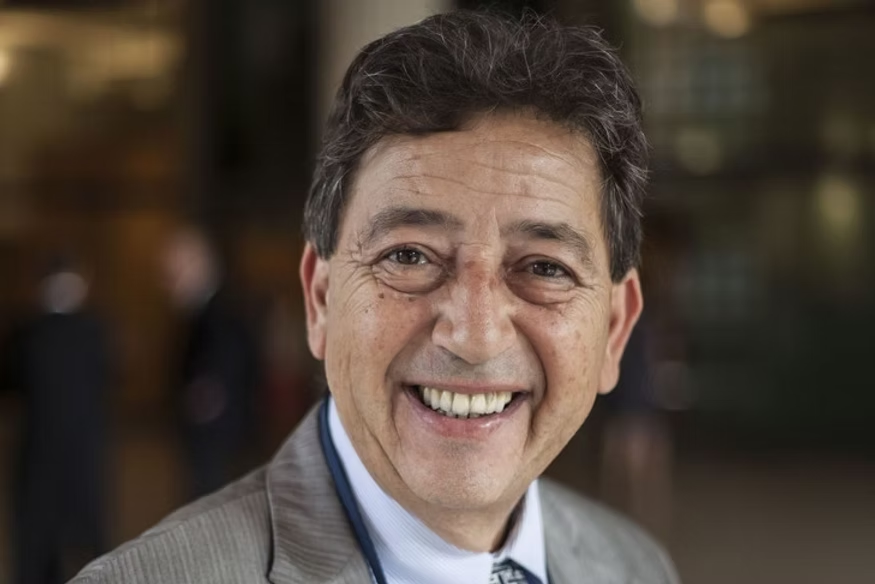
Portrait The spiritual guide of the Alawiyya Sufi order is one of the guests at the Écritures et spiritualités literary festival this weekend in Paris. Mélinée Le Priol, 27 November 2019, La Croix For nearly forty-five years, Sheikh Khaled Bentounes has tirelessly promoted a reconciled humanity. He has done so by creating youth movements (the Muslim Scouts of France), initiating United Nations international days (the International Day of Living Together in Peace, celebrated every 16 May), and publishing books, often with Albin Michel, which he is not particularly keen to present to the public. Why has he agreed to take part this Sunday, 1 December, at the Collège des Bernardins, in the Écritures et spiritualités festival, to awaken people through the Thousand and One Pages event? (1) “The organisers are friends,” confides this prolific French-Algerian, whose speech is peppered with the recurring words “fraternity” and “humanity”. Once again, this 70-year-old world traveller will leave the Nice hinterland, where he spends most of the year with his wife, when he is not in Algeria for several months each year. Sage or mere witness? The Paris festival has invited him not only to present his books (2), but also to take part, alongside Marion Muller-Colard and Valérie Zenatti, in an unprecedented “Song of the Earth”. Each of the three writers will read a text written especially for the occasion, addressing the ecological crisis in a personal and literary way. “The future is growing darker,” laments the Sufi spiritual guide, concerned about the environmental consequences of humanity’s “greed”, through which people have sought to “make themselves divine” with the help of technology. “But humanity has forgotten that it has a conscience and that it must nourish it! By cutting itself off from this source of wisdom, it has unleashed forces that are now running rampant.” With his peaceful discourse and unwavering ideals, Khaled Bentounes seems like a sage in a world where wisdom no longer appears to have a place. The idea makes him smile, but he corrects it: “I am a witness to my time, that is all.” A witness engaged in the course of the world, refusing to live withdrawn on an island or a mountain. For “elitist spirituality”, as he calls it, does not really speak to him. His father’s son Spirituality is an inheritance for this native of Mostaganem, Algeria. The son of Sheikh Hadj Al Mahdi Bentounes, spiritual guide of the major Alawiyya Sufi order, now established across the Maghreb, Europe and North America, young Khaled grew up within the protected walls of a zawiya (3), home to 130 people: extended family members and close companions of the community. The Algerian War soon brought violence into this world from another era, where “everything was shared”. Twice, the zawiya was surrounded and searched, and the nine-year-old child narrowly escaped death during a demonstration. If Khaled Bentounes later chose to stand against violence, it was therefore “with full knowledge of what it means”. The rest of his journey resembles that of a crown prince, caught up at the last moment by the demands of the throne. In the early 1970s, a young father, he built up his ready-to-wear clothing business in France, a country determined to break with its patriarchal heritage. Then came the day in 1975 when his father died suddenly in Mostaganem. “When I returned for the funeral, I thought I would leave immediately afterwards and never set foot in Algeria again,” he recalls today. When “religiosity poisons the human heart” But the “wise elders” decided otherwise, believing that Khaled should succeed his father as the order’s spiritual guide. “I refused for more than a year. Imagining these eighty-year-old sages, who represented an ideal of humanity to me, coming to kiss my hand was difficult.” He eventually accepted, in order to help preserve the spiritual heritage entrusted to him. “At the time, spirituality was being sidelined in Algeria: people spoke of the new human being, finally freed from transcendence.” Forty-four years later, the religious landscape has changed considerably across the Maghreb and the Middle East. Islamists have sown “anarchy” in Syria, Libya and Afghanistan. Frequently questioned, like other Muslim leaders, about the harm caused by these men in black, the French-Algerian repeats that Islam must be “revitalised” in order to combat this “religiosity that poisons the human heart”. Is he not running out of patience and energy after so many years of striving for a peace that still seems so far from being achieved? “I do not despair,” declares this passionate advocate of peace education for young people. A moment later, however, he adds: “What worries me is that time is passing and things are not getting done.” —— Brief biography 1949 : Born in Mostaganem, Algeria. 1954-1962 : During the Algerian War, he lives with his family in the zawiya of Mostaganem. 1968 : He leaves to study law and history in Paris, before establishing a ready-to-wear clothing business there with his wife. 1975 : Following his father’s sudden death, he becomes the 46th spiritual guide of the Alawiyya Sufi order. 1986 : He takes part in the Assisi interfaith meetings in Italy, convened by Pope John Paul II. 1990 : He founds the Muslim Scouts of France, which he regards as a “school of citizenship”. He is now its honorary president. 2001 : He establishes the Alawiyya International Sufi Association (AISA) in Drancy. In 2012, it is recognised by the United Nations as an international non-governmental organisation. 2017 : The United Nations General Assembly adopts a resolution proclaiming 16 May the International Day of Living Together in Peace, an initiative of AISA. 2018 : He attends the beatification of the Tibhirine monks in Oran. (1) See also p. 12-13. (2) Including his latest book, Islam and the West: A Call for Living Together, Jouvence, 2018, 192 pages, €16.90. (3) A centre around which a Sufi order is organised.